

Key Takeaways: |
|
What is an AI Overview?
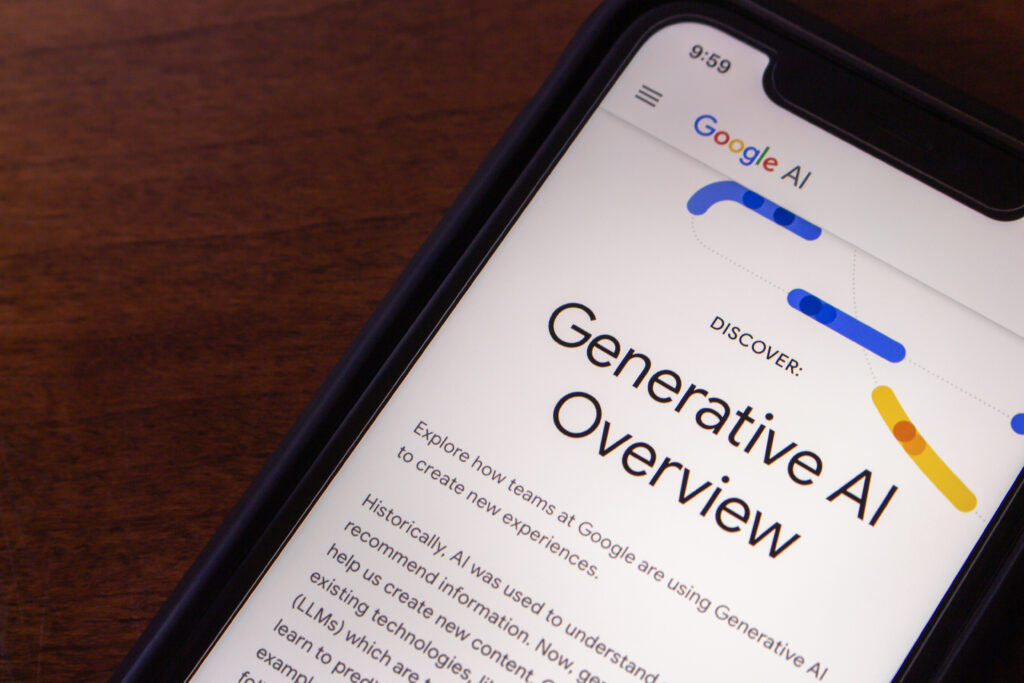
If you haven’t manually disabled them in your browser, you’ve probably already noticed them appearing at the very top of almost every search result: the AI Overview. These summaries are Google’s attempt to answer complex questions directly, drawing information from multiple sources and presenting it in a concise, easy-to-read format. Essentially, Google is doing the legwork of in-depth research across multiple websites for you. The goal is to provide users with a quick answer to their specific question, including links to dive deeper if they choose to do so.
A New Approach to Search
For businesses, this shift in how information is presented has big implications. Even if you’ve worked hard to rank in the top spots on the search results page (SERP), the AI Overview often sits above organic listings and there’s no guarantee your site will be featured, despite a strong ranking. Furthermore, the convenience of these summaries often results in a “zero-click search,” where users find their answer without ever visiting a website, leading to a drop in organic website traffic. In this new search environment, it’s becoming more important to provide users with the information they need directly on the SERP, whether it’s through Featured Snippets, Knowledge Panels, or the AI Overview.
What We Know About Getting Featured
Google’s AI Overview is always evolving, but based on current patterns (as of September 2025), there are several best practices that can improve your chances of being included.
Create Comprehensive, High-Value Content
Google favors content that thoroughly addresses the user’s query, goes beyond basic information, and is genuinely useful. This means writing original, detailed, well-structured content that not only answers the question but also provides context, multiple perspectives, and supporting data. Keep your content fresh by updating it with new information, statistics, and examples.
Expertise matters. Showcase author credentials, link to bios that describe background experience, and highlight your brand’s authority through third-party mentions, reviews, and industry recognition to build trust. Establishing topical authority, that is, covering a subject in depth across multiple pieces of content helps Google recognize your site as a go-to resource. Demonstrating this EEAT (Experience, Expertise, Authoritativeness, and Trustworthiness) is a key factor in Google’s quality assessment and is becoming increasingly important for ranking.
Optimize Content Structure
Don’t bury the lede; answer the main question upfront and then expand with supporting details. Formatting plays a big role in whether Google’s AI can parse your content. Short sentences, clear headings, and section breaks improve accessibility, and internal linking between related articles on your site helps establish context. Bullets and lists make your content easily scannable, and summaries or takeaway sections make it easier for AI to capture your key points. Schema markup, such as FAQ, HowTo, Article, or Reviews, provides structured data that Google’s systems can easily interpret. Design your content so it’s ready for featured snippets, with concise answers, lists, and Q&A formatting where appropriate.
Keep SEO Fundamentals Strong
While AI Overviews pull from various sources, most citations still come from the top 10 organic results. That means traditional SEO still matters. Focus on a solid keyword strategy based on long-tail keywords, include multiple backlinks to respected sources, and prioritize a positive user experience. And don’t neglect the technical details like mobile optimization, fast page speed, HTTPS security, and clean site structure to help Google crawl and index your site effectively.
Optimize for SERP features such as Featured Snippets, People Also Ask boxes, and Knowledge Panel since these elements often feed into AI Overviews. Above all, match search intent precisely to address the exact question being asked and add images and video if applicable.
Focus on Natural Language and Topic Depth
Google’s AI doesn’t just match keywords, it interprets meaning. Overviews are more likely to appear for longer, more specific search queries, especially those phrased as questions. Using natural language and conversational phrasing that mirrors how people actually ask questions can improve your odds. Try to group related keywords into topic clusters and cover them each in depth, rather than chasing single keyword phrases. This involves “clustering” your content using several thematically related pages that are internally linked, helping boost your topical authority. Targeting informational and question-based queries with detailed, step-by-step answers also helps increase your chances of being included.
An Ongoing Process
AI Overviews are still evolving, and so should your approach. Monitor performance closely, track how AI Overviews affect your visibility and adjust your strategy as Google continues to refine this feature. Although nothing will guarantee your inclusion, a winning strategy requires an ongoing commitment to quality, relevance, and adaptability. By answering questions clearly, keeping content fresh, and ensuring your site is technically sound, you can increase your chances of being one of the sources Google trusts to summarize a topic for millions of searchers. Connect with Trevi today to learn how we can help make that happen.